

Devstars
Blog
Date: 25/06/2026
Stuart WatkinsFollows on from I built a beach safety forecast for Jersey in a weekend with an AI browser.
When you live on a small island, the sea is never far from your mind. I’ve got an eight-year-old who’s falling more in love with the beach every week, and I’ve spent thirty years working in digital. At some point those two things were always going to collide.
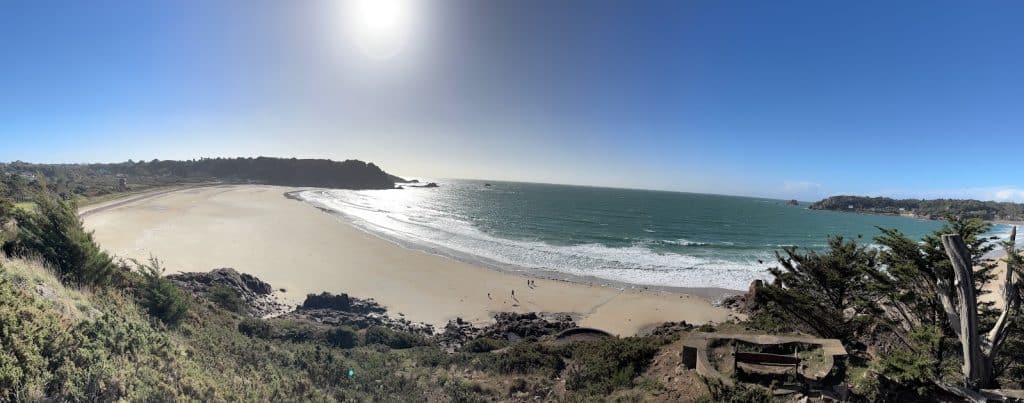
Last month I wrote about building a beach safety forecast for Jersey in a weekend, well, I’m still building it a month on.
This is the bit I didn’t get to. Why I created it, what’s changed since, and what a month of real feedback has taught me.
AI gets a rough ride at the moment. Some of that’s fair. Between the billionaire tech bros and the fear-mongering, it’s easy to forget there are real positives in there too.
The reality is, used well, this stuff can do genuine good. We’ve been doing work with our friends at Scryptic and University College London, on a platform that teaches health and bioscience professionals the data science and machine learning behind modern research. Seeing that up close got me thinking. If this kind of technology can help people working on health and disease, why not use the same idea to help people get the most out of the ocean, and do it safely?
That’s where Tidesense came from. Not a product plan. Just a want to take the technology we’ve got, and the data that’s already out there, and point it at something useful.
For 25 years, Devstars has built digital work for some serious names. Creative work for the likes of Radiohead and Taylor Swift back in the day, then a queue-timing system for Heathrow Airport, a security platform for G4S, and a Ministry of Defence research programme into immersive training. I don’t mention that to show off. I mention it because, after all of that, the most satisfying thing you can build is sometimes the simplest one. The one that helps the people right around you.
Quick recap, because it’s moved on since the last post.
Tidesense pulls in live data from a few places and blends it into one picture:
That last one matters more than you’d think. Jersey’s cliffs and bays create wind shadows, spots that feel calm because the land is sheltering you. They also bounce wind back off the cliffs in ways that catch people out. So I’ve mapped the island’s topography in, to model where you’ll get that shelter and where you’ll get the bounce-back.
Jersey checks its beaches through the summer for water safety and pollution. Generally our water is really good. But like anywhere with farmland nearby, heavy rainfall can wash run-off into the sea afterwards.
So I’ve built in Jersey’s own water quality data, and added an extra layer on top. If there’s heavy rainfall over a certain amount, Tidesense flags the day after as one to be more careful around the water. You wouldn’t want to be drinking seawater at the best of times. After a proper downpour, it’s just worth being a bit more switched on.
A forecast is only as good as what feeds it, so it’s worth being open about where Tidesense gets its information. I’m also just glad to credit the people who publish this stuff openly, because the app wouldn’t exist without them.
The thing that quietly pleases me about that list is how much of it is free, open, publicly funded data. People and organisations choosing to publish good information for anyone to use. Tidesense is really just a way of stitching it together for one job. Helping people use the ocean here, safely.
You can model wind, tide and swell all day long. But the bloke who’s been launching off the same slipway for forty years knows things the API never will.
So I’ve built feedback into the app, so people can tell me where it’s right and where it’s wrong. That’s how it gets properly tuned. The plan is to fold that local knowledge back into the model over time.
If you know these waters, that’s a genuine ask. Tell me what it’s getting wrong.
I’ll be straight with you. Right now the app is quite technical.
If you just want the headline, there’s a simple red, amber, green system. Green, crack on. Amber, be cautious. Red, not today. Most people can get what they need from that in a couple of seconds.
If you want to know why, the data’s all there, with overviews to help you read it. Over time I want to make the whole thing simpler for everyone, not just the data nerds. That’s the direction of travel.
One bit worth mentioning, because we sort this exact thing for businesses every week.
Tidesense started life as a JavaScript app. Great for people, not so great for search engines, which often struggle to read that kind of content. So I’ve built HTML layers over the top, the part search engines and AI tools can actually pick up and understand.
Behind those, I’m running PHP triggers and hourly cron jobs. Basically little automated jobs that wake up every hour, grab the latest data, and update the pages. So the public pages stay current, and you can click straight through to the live app from there.
It’s a small-island version of a problem we fix all the time. You can build something brilliant, but if search engines and AI can’t read it, half the world never finds it.
This is very much a side project. I’ve been building it on my own so far, more or less. The team have seen it, but I haven’t really pulled them in yet. That’ll come.
For now it’s beta, it’s honest about being beta, and it’s getting better every week, partly thanks to people telling me what’s wrong with it. It even got picked up by a sailing magazine recently, which I genuinely didn’t expect.
If you’re on the island and you love the water, give it a go. Tidesense is at tidesense.co.uk. Use it, break it, and tell me what local knowledge I’m missing, at stuart@devstars.co.uk.
And the thing that matters more than anything I’ve built. Always check RNLI safety advice, lifeguard flags, and the States of Jersey sea safety guidance before you get in. Tidesense is an early-stage, model-based forecast. It’s for guidance only, not a substitute for your own judgement or official safety advice.
Stuart Watkins is the founder of Devstars, a digital growth agency working from Jersey and London. He spends most of his time helping ambitious businesses build digital things that actually work, and the rest of it on the beach with his son.
Tell me what you’re trying to fix. Half an hour, no pitch, no slide deck.
If we’re the right fit we’ll talk about what’s next. If we’re not, I’ll point you to someone who is.


